TIBCO Cloud Control Plane
Overview
Control Plane is a unified platform that allows businesses to provision, manage, and monitor their TIBCO applications from one place. At its core, users register and manage Data Planes, the environments where their business applications and integrations run, giving operations and development teams visibility and control from a single hub. I worked across this project as both manager and designer, owning key design areas while leading a team of 6 through the full product lifecycle.
"Enterprise operators shouldn't need to be infrastructure experts just to understand the health of their platform."
Problem
As TIBCO shifted to a platform subscription model, customers were managing a growing set of products with no centralised experience. Data Planes and the capabilities running on them were configured and monitored across disconnected tools, forcing teams to constantly switch context to deploy applications, check performance, and manage access. There was no single place to see what was running, what was broken, or who had access to what, creating inefficiency, inconsistency, and a high support burden.
Research
I led stakeholder alignment sessions to establish platform goals and user needs, and conducted competitive research to understand how similar platforms approached unified management. I also worked closely with an internal customer panel throughout the project, using their input to help shape the overall vision and validate the direction of key decisions early on.
Working with product managers and engineering leads, I mapped out three distinct user types, Platform Owners, Platform Ops engineers, and Developers, each with different mental models, technical needs, and tolerance for complexity. These informed our personas, user journeys, and prioritisation decisions throughout the project.
To validate design decisions at each stage, I led regular usability testing efforts through usertesting.com covering core flows, new features, and iterative improvements after each release. Findings were documented and fed directly back into the design process, ensuring the platform continued to improve based on real user behaviour rather than assumption.
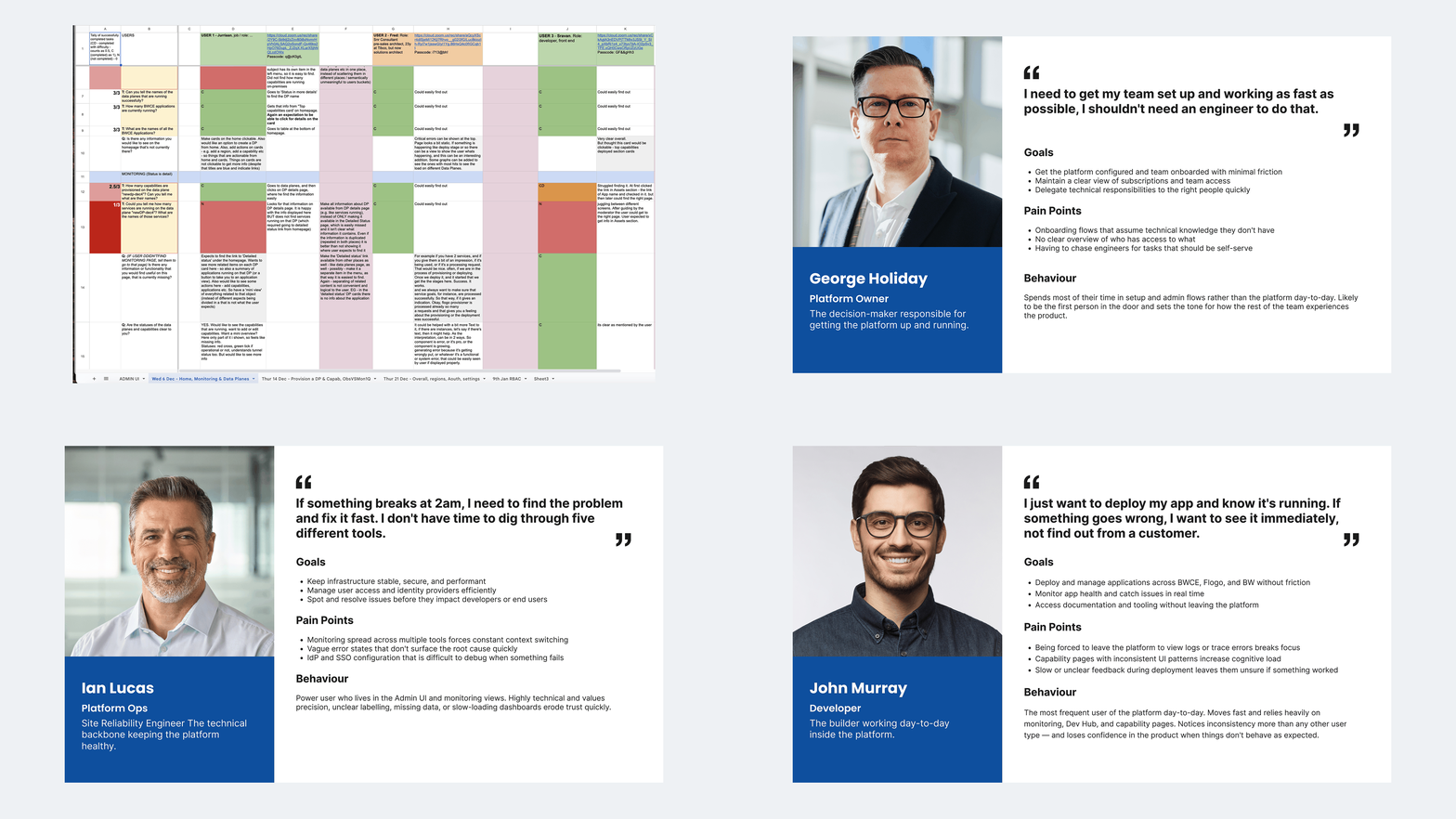
User testing feedback and personas developed to define platform user needs and guide design direction.
Solution
Control Plane brought together provisioning, monitoring, observability, and access management into one unified experience. Users could register and manage data planes, onboard capabilities through a consistent wizard pattern, monitor infrastructure health, and manage team permissions, all without leaving the platform. A provisioning blueprint was established early on to ensure consistency as new capabilities were added over time.
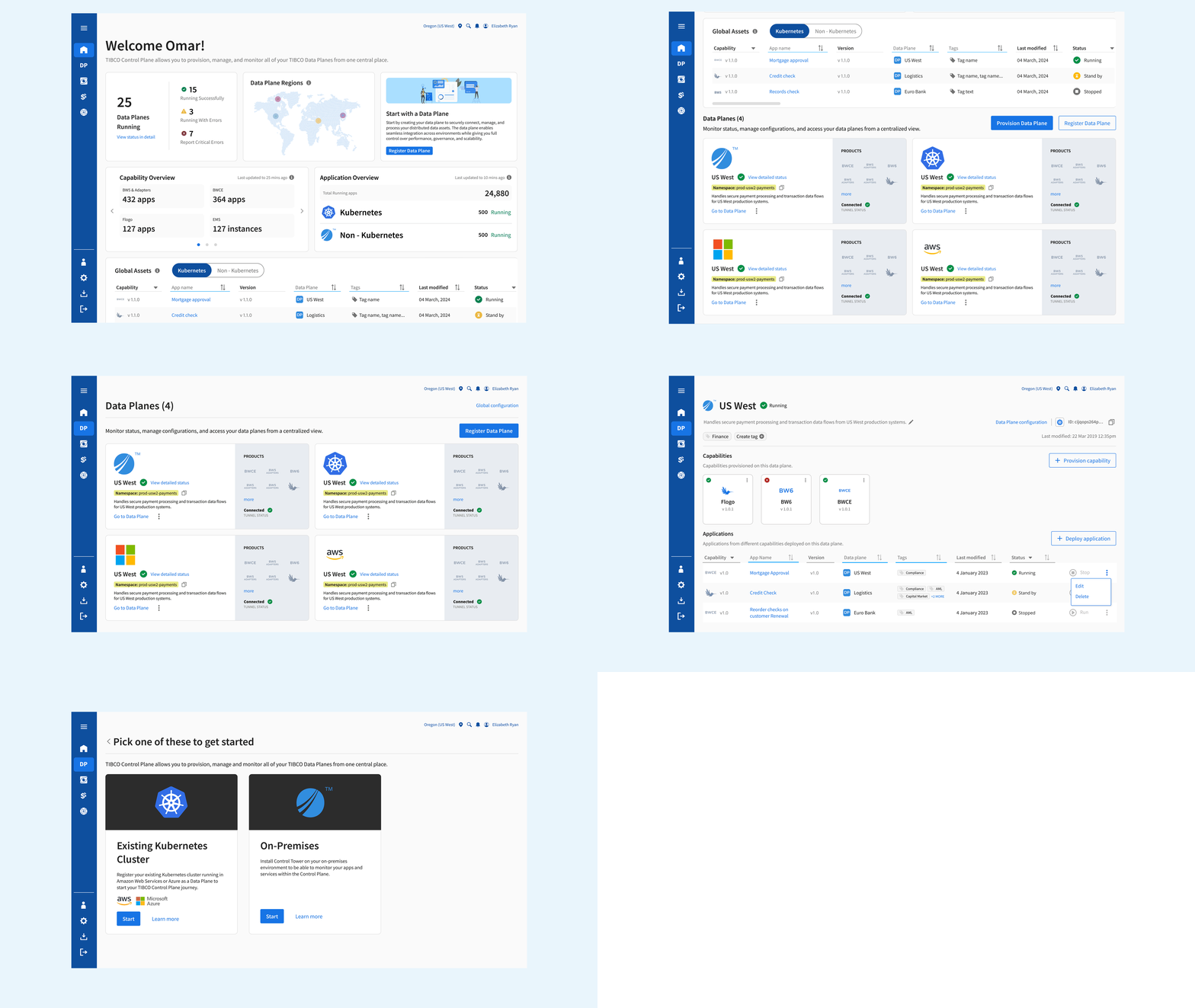
The unified dashboard giving operators a real-time view of environment health and active alerts.
Design Process
With a small team and a large scope, process discipline was essential. I transitioned the team from siloed interaction and visual design roles into more holistic product designer responsibilities, pairing designers across disciplines to improve design quality and consistency. We migrated our component library from Sketch to Figma and built out a Control Plane-specific set of components to accelerate output and maintain platform consistency.
Workload was managed through Jira using a sprint approach, with each designer owning a focused area end-to-end. Before any screens were designed, I ran workshops with stakeholders to define and validate complex user flows, covering first-time setup, data plane provisioning, capability configuration, notifications, and upgrades. These flows acted as the foundation for all design decisions that followed.
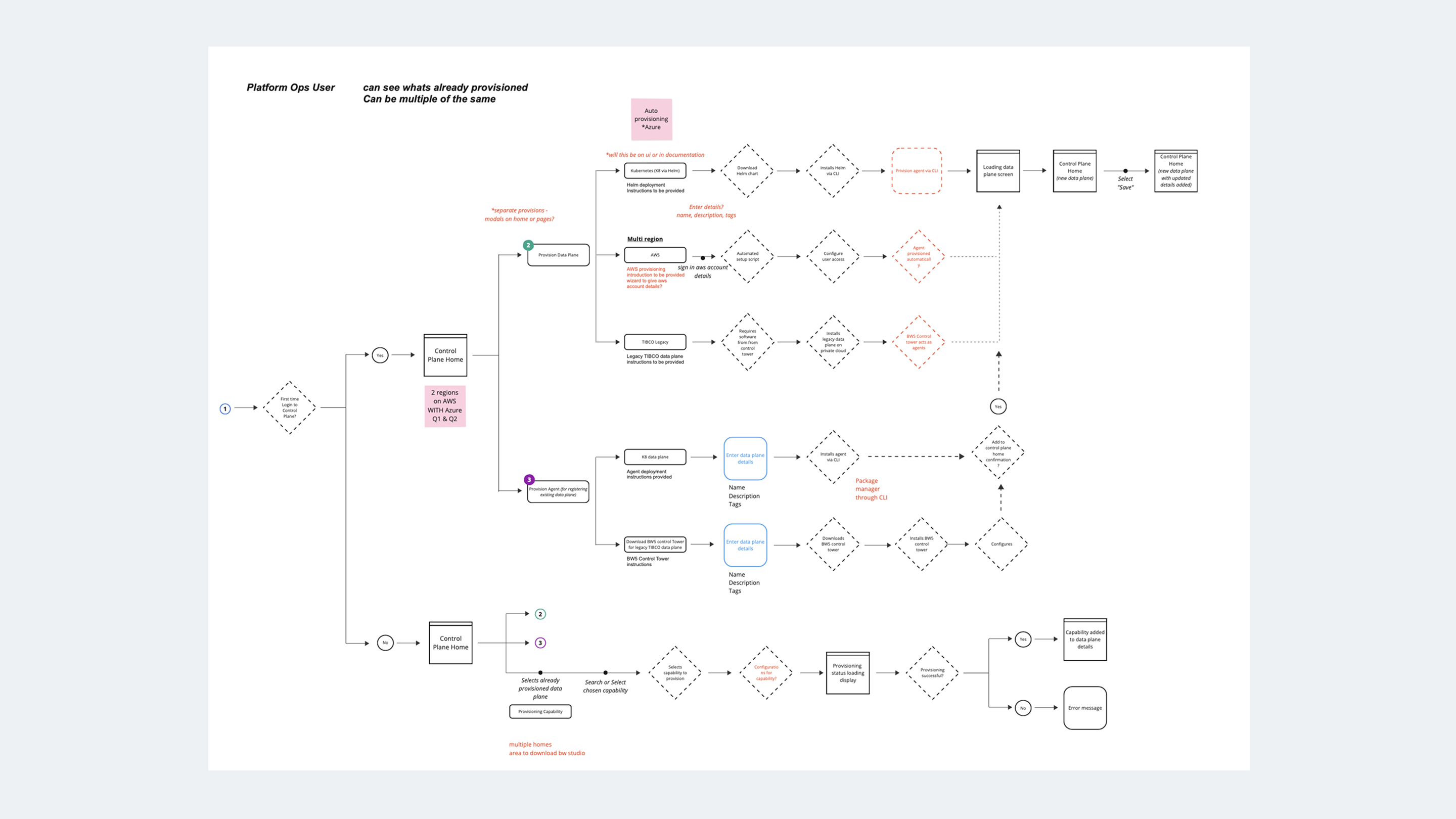
Early mapping of the Control Plane flow, used to align stakeholders and establish the foundation for design decisions.
Final Design
The platform centred on a home dashboard giving users a real-time overview of their data planes and assets, supported by a consistent wizard pattern used across all provisioning flows. Key surfaces included capability pages tailored to each product's unique requirements, an Admin UI for subscription and SSO management, an RBAC flow for granular permission assignment, and an Observability dashboard bringing metrics, logs, and traces into a single contextual view, eliminating the need to leave the platform to troubleshoot issues.
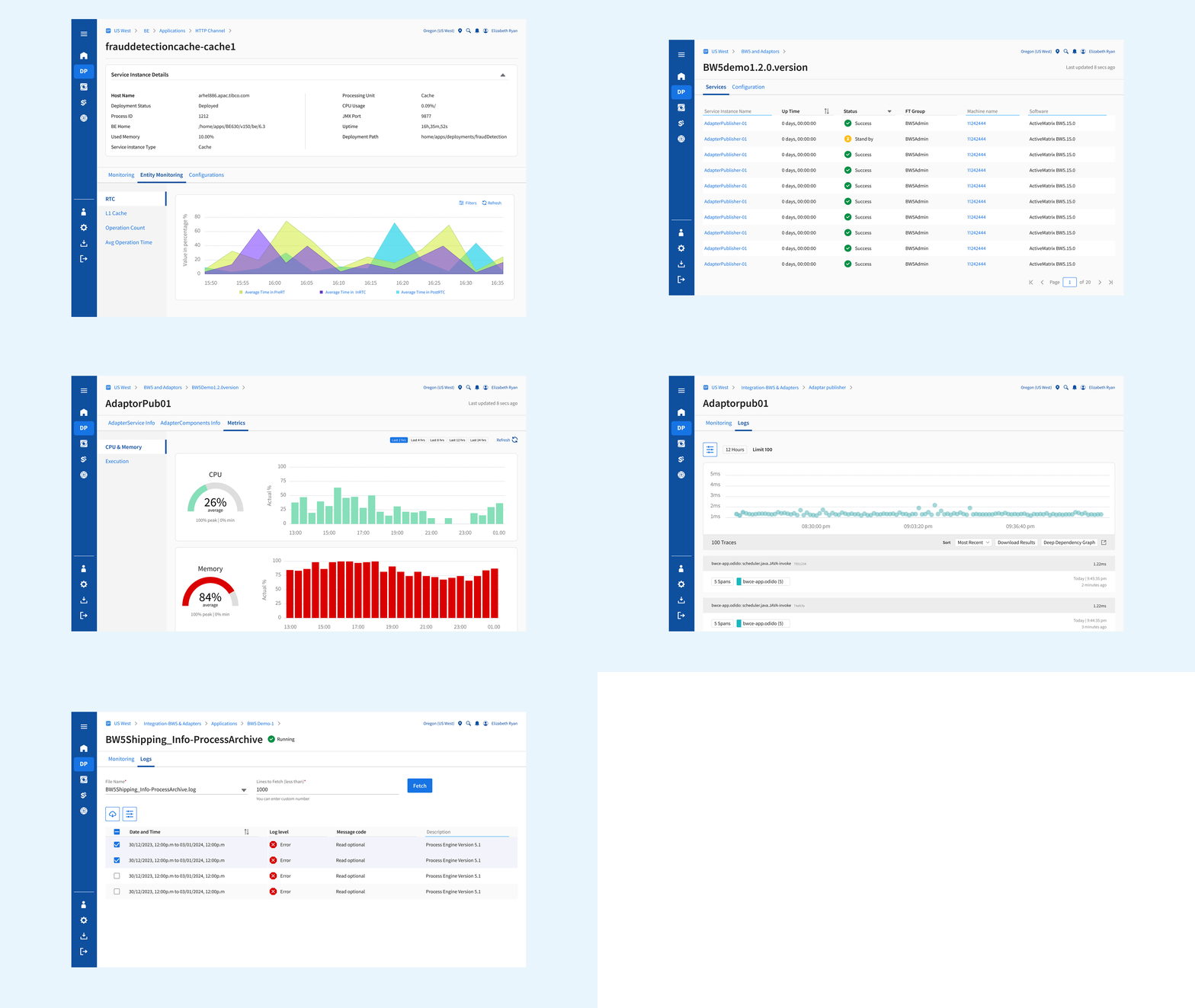
Capability pages tailored to each product's unique requirements, built on a consistent provisioning blueprint.
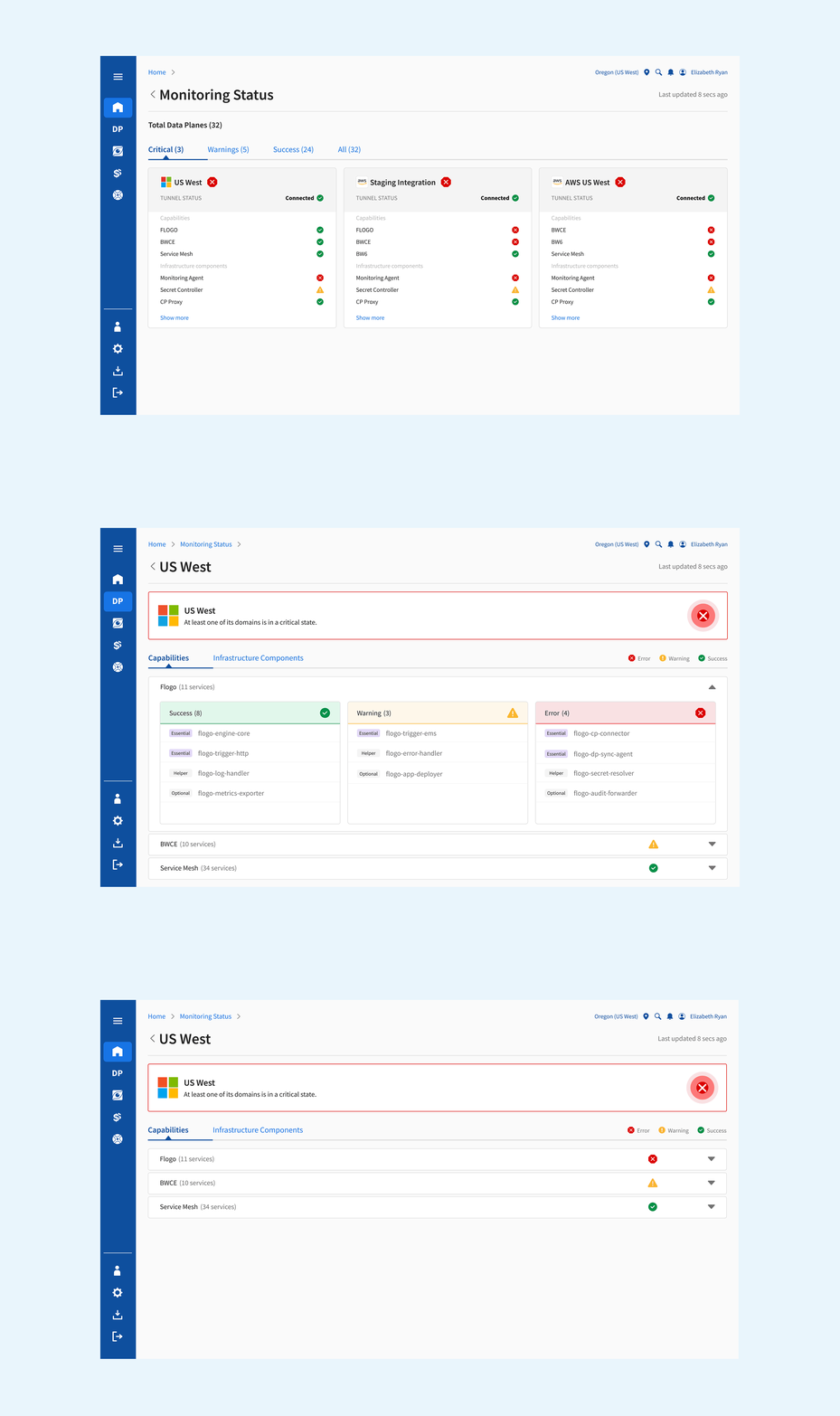
Monitoring views providing real-time visibility into platform health and service status.
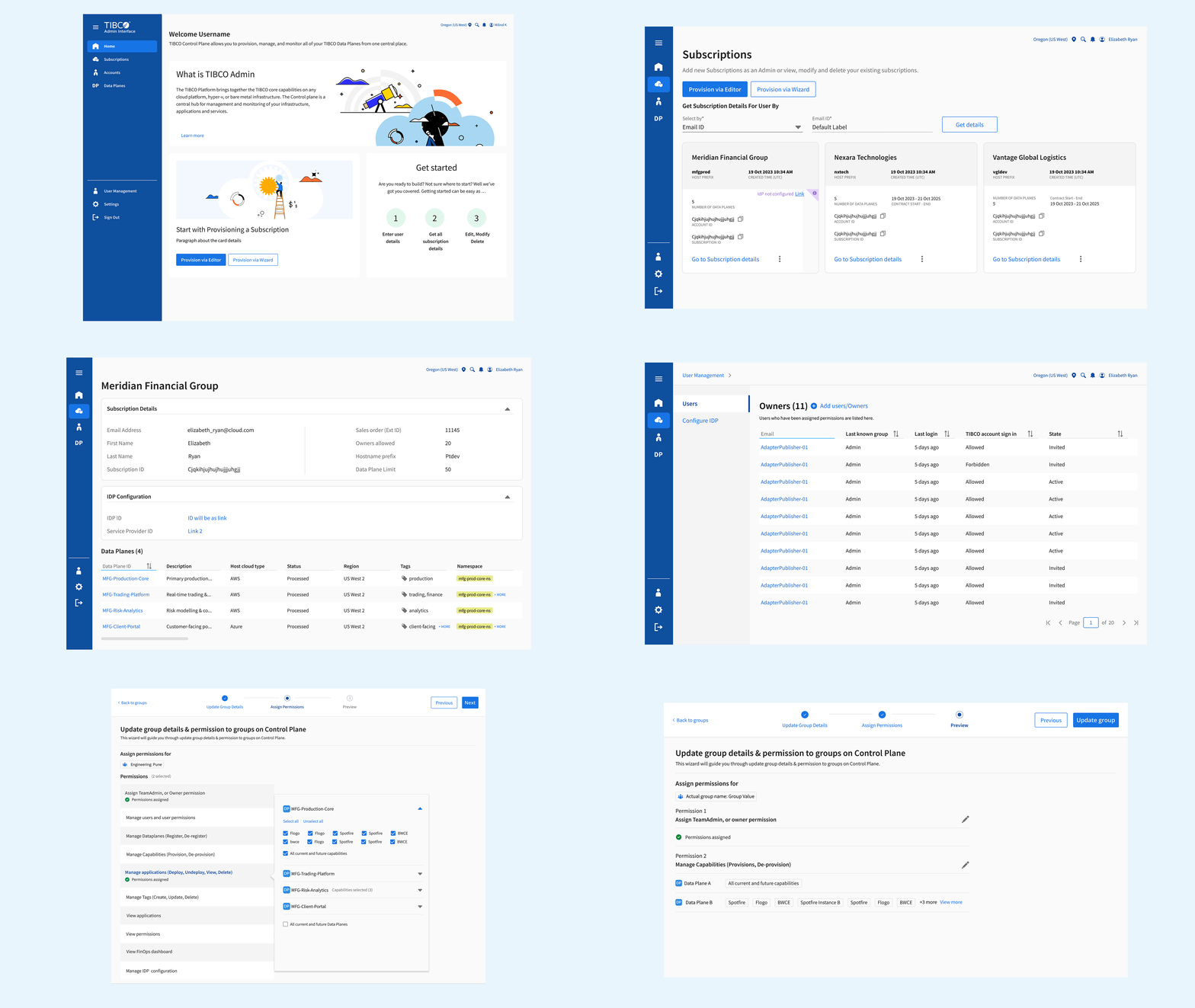
The role-based access control handled in the Admin UI portal, designed for IT admins managing subscriptions and large teams across environments.
Outcomes
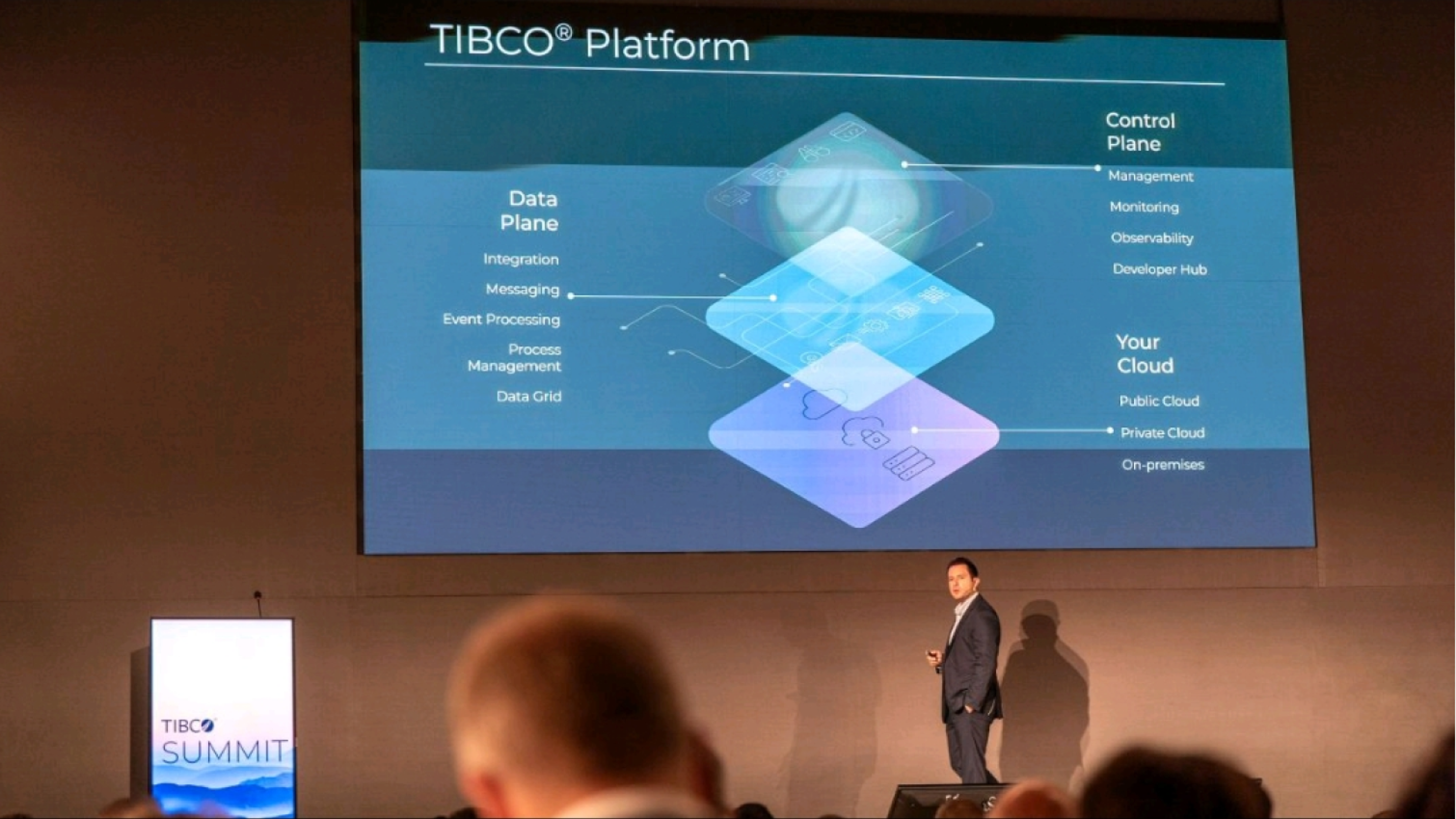
TIBCO Cloud Control Plane launched at TIBCO Summit to an audience of customers and partners, marking the first public introduction of the unified platform. The reception validated the direction, consolidating a fragmented multi-product experience into a single, manageable hub delivered measurable results from the outset.
-
60% reduction in time to identify and resolve mission-critical issues Driven by the introduction of unified monitoring and observability, eliminating the need for teams to jump between tools to diagnose problems.
-
30% improvement in productivity With faster application development and deployment enabled by the consistent wizard pattern, structured provisioning flows, and a centralised view of all assets and data planes.
Beyond the metrics, the platform established a scalable foundation for future growth. The provisioning blueprint I created ensured that as new capabilities were onboarded, they followed a consistent pattern, reducing design and engineering overhead with each release. The component library built during the project continues to support the team in maintaining consistency as the platform expands.
Customer onboarding and an ongoing research programme - combining usability testing and direct customer interviews, are actively shaping the next phase of the platform, ensuring future releases are grounded in real usage patterns rather than assumption.