TIBCO Cloud API Modeler
Overview
TIBCO Cloud API Modeler is a web-based tool that allows users to create and model APIs graphically, supporting both OpenAPI and AsyncAPI specifications through an intuitive visual or developer view interface. I worked on this project as both design manager and designer, taking it from a failing legacy product to a fully redesigned, GA-released tool with a measurably growing user base.
Problem
The existing API Modeler was underperforming in almost every area. Market research and usability testing revealed three core issues. The interface was outdated and only supported one API at a time, limited to OpenAPIs, users consistently lost context when navigating between screens to build out a spec. The tool was positioned as a standalone product with no integration into the broader TIBCO ecosystem, meaning its potential was largely untapped. It also lacked mocking capabilities and other features that competitors were offering as standard. At the time, the product had only two consistent users across the entire customer base.
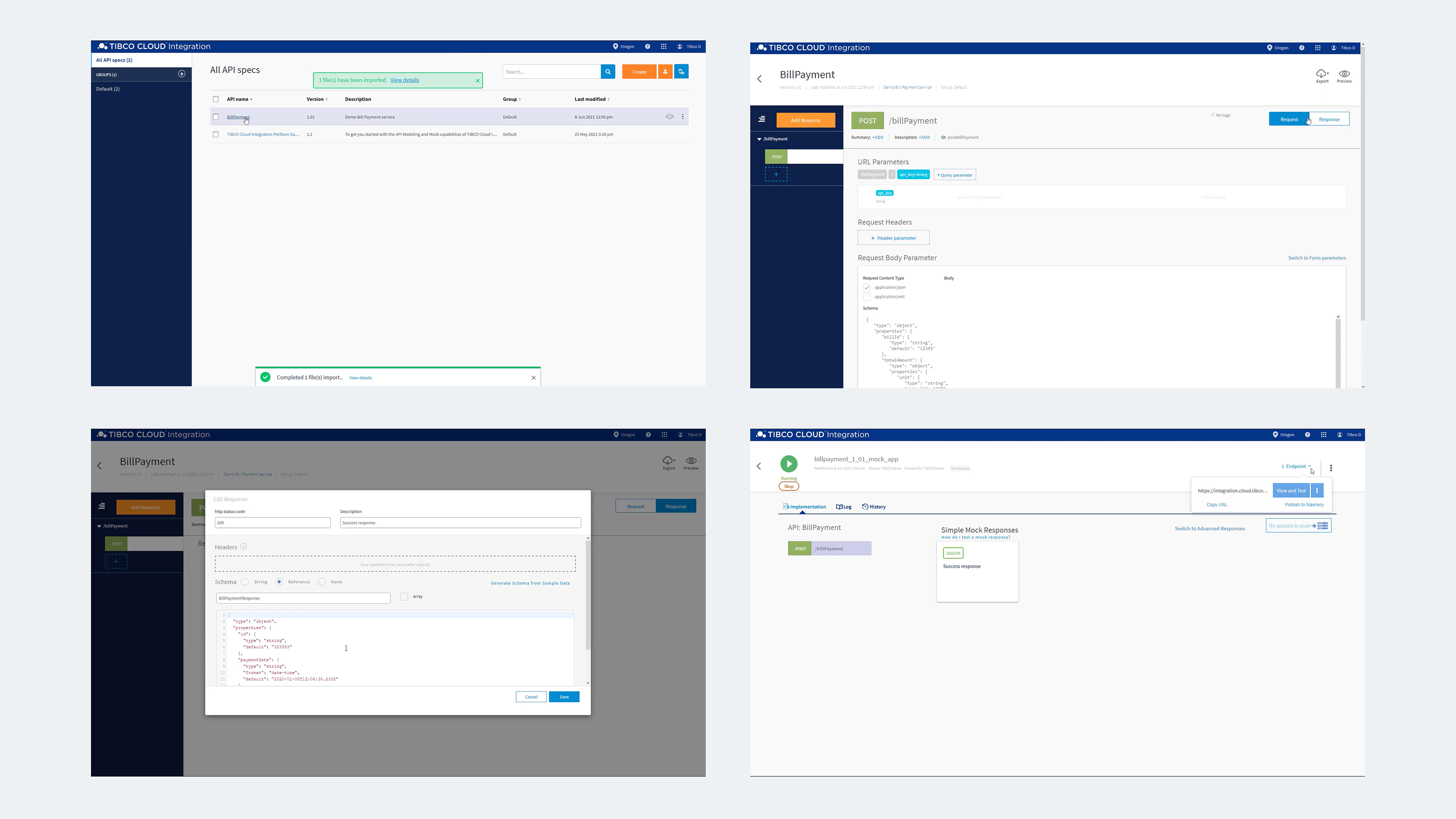
The legacy API Modeler — outdated interface, limited to a single OpenAPI at a time, with no integration into the broader TIBCO Cloud platform.
Research
I began by conducting a thorough analysis of the existing API Modeler alongside competitive research to understand where the market had moved and what users expected from a modern API modelling tool. Working with the product manager, I defined our user personas and documented key use cases, including a critical integration scenario with TCI Flogo, where a developer could push an API spec directly into a Flogo application.
To validate design decisions at each stage of the project, I led a structured usability testing programme using usertesting.com. Testing was run in three phases, internal set-up, a pilot test, and a full customer run, with four core research questions guiding each round:
- Can users navigate the new API Modeler experience effectively?
- How does the new experience compare to the current product?
- Can users navigate from the homepage to their list of projects?
- Are users able to create a new project and Open API 3.0?
Each session used structured task-based scripts covering homepage navigation, project creation, API spec creation, resource and method management, schema generation, and documentation access. Results were documented across two categories, what went well and what needed improvement.
What went well
Across multiple tasks, 5 out of 5 users completed successfully, demonstrating that the core navigation and creation flows were intuitive and well-structured. Users were able to understand the homepage, locate projects, and work through API creation without significant friction.
What went wrong
Testing surfaced several specific issues that directly shaped design iterations. One user misread "how many APIs are in this project" as referring to the number of projects rather than Open APIs, highlighting an ambiguity in labelling that needed to be resolved. Users also expressed a preference for more active, inline editing rather than navigating between views.
All findings were documented and fed directly back into the design process, informing targeted improvements after each release, including clearer method deletion, updated right panel icons, and a revised editing view structure.
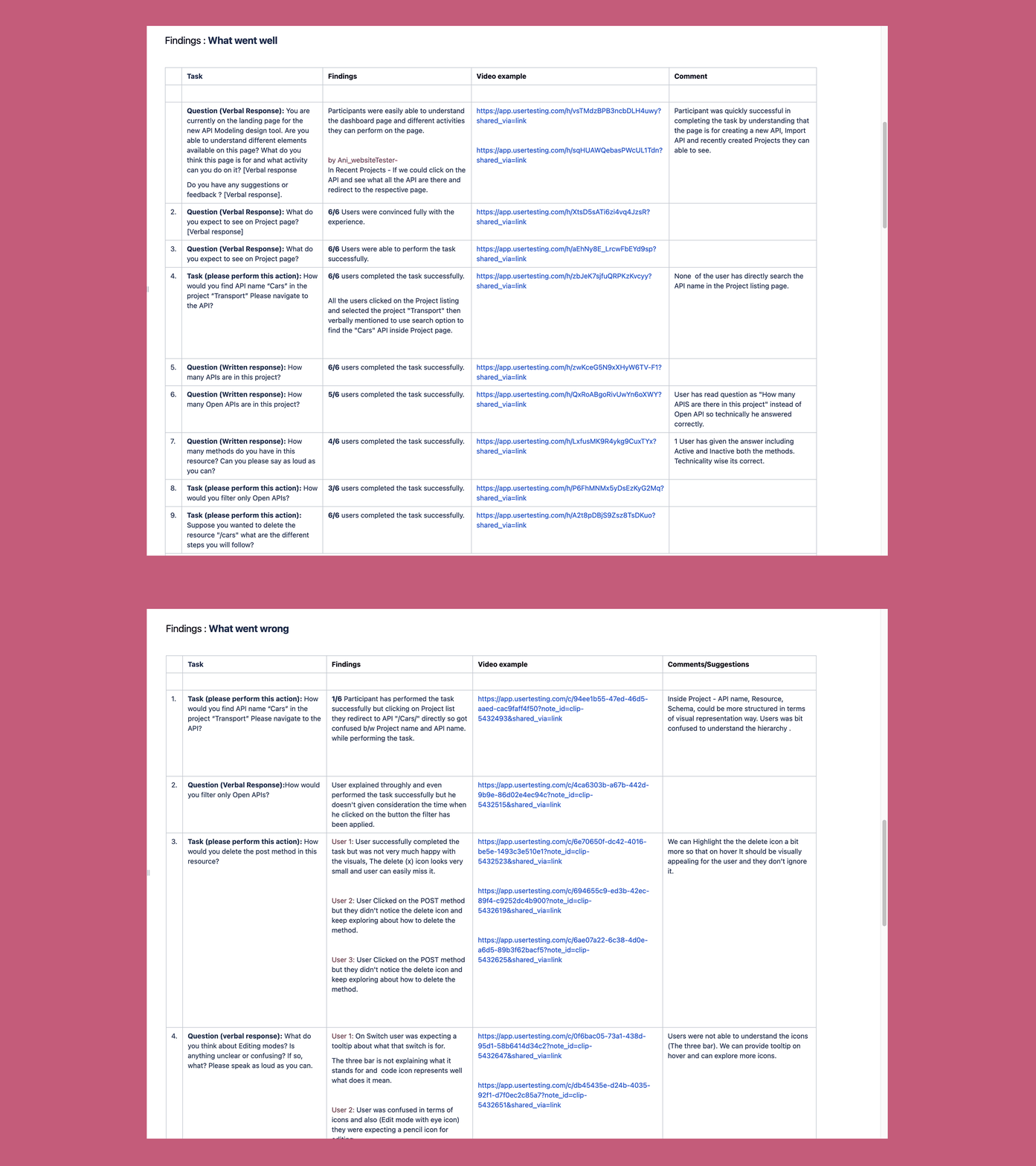
Usability testing findings and task completion results used to validate and iterate on the redesigned experience.
Solution
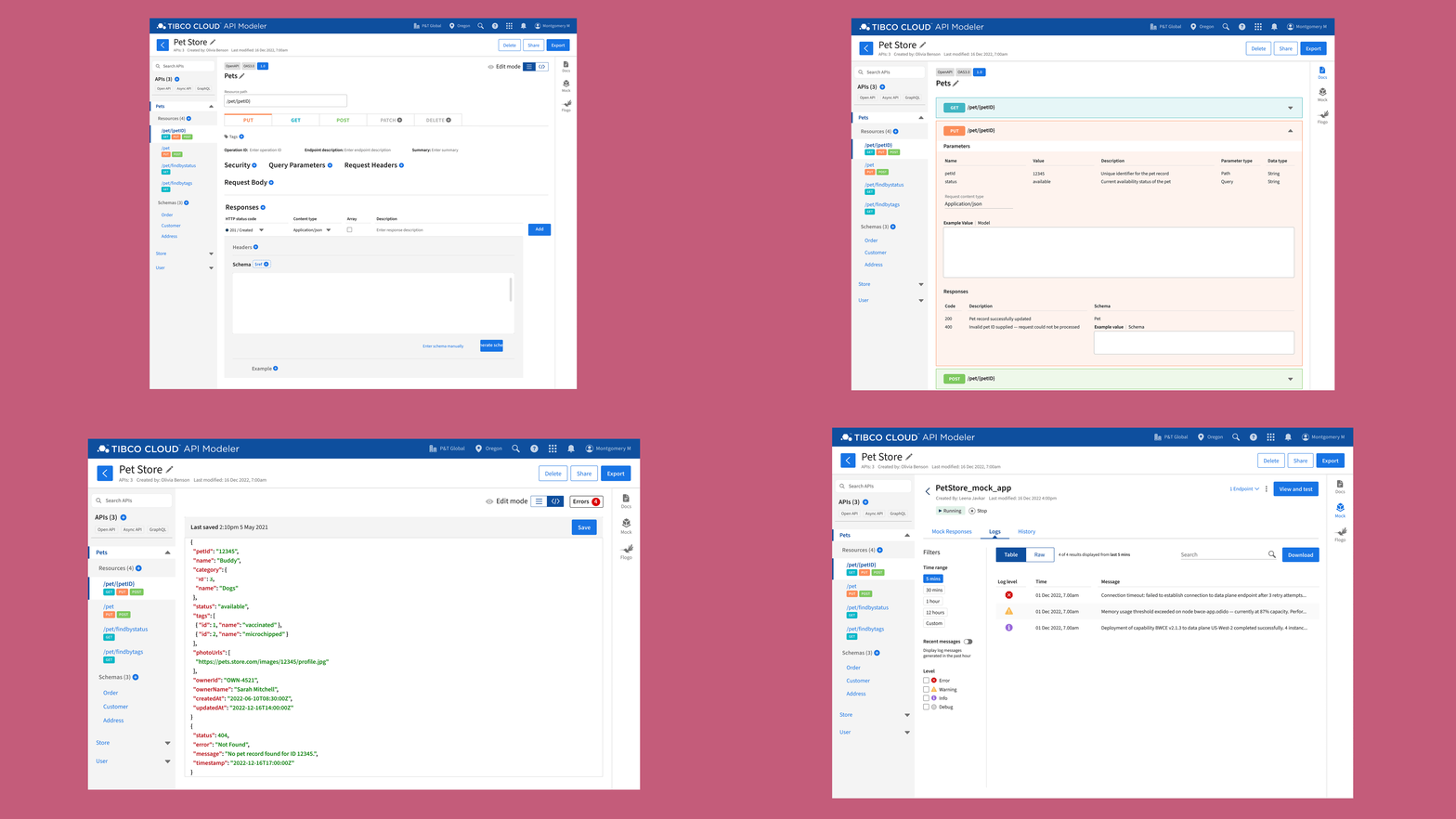
A ground-up redesign of the API Modeler, repositioned as an integrated part of the TIBCO Cloud platform rather than a standalone tool. The new experience supported both OpenAPI and AsyncAPI in a single, consistent interface, catering to two distinct types of user. A graphical visual interface allowed less technical users to build and model APIs step-by-step without needing to write code, while a developer view gave technical users the ability to edit specs directly, assess errors inline, and work at the speed they expected. Both views were available for OpenAPI and AsyncAPI, ensuring no user was forced into a workflow that didn't suit them. An in-context right-hand panel gave all users access to documentation, mock apps, and Flogo integration without losing their place, and mocking was built directly into the workflow, removing the need to leave the platform to test and validate an API.
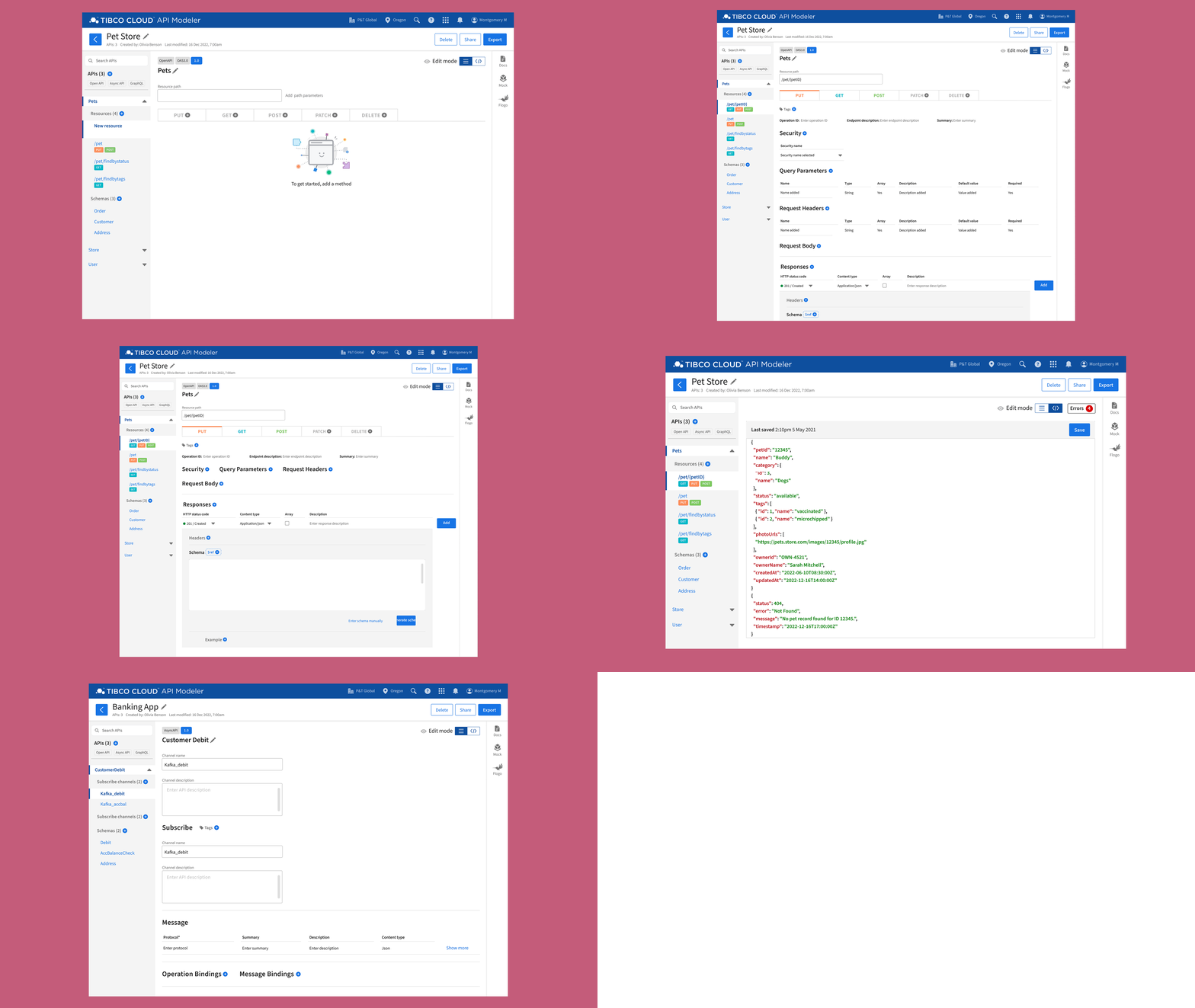
End-to-end flow through the redesigned API Modeler, from project creation through to resource and schema management.
API settings panel showing the configuration view, with and without details entered.
Design Process
Working with the product manager and cross-functional PMs, I established a phased roadmap, beginning with OpenAPI, followed by AsyncAPI, mock integration, and a CLI plugin. The timeline was structured across three quarters, moving from beta access and internal testing through to GA release, analyst reviews, and tenant integrations.
I mapped out the integration plan with other TIBCO capabilities, documenting use cases and ensuring each was grounded in realistic user scenarios before any design work began. A key integration use case, API Modeler to TCI Flogo, was fully documented as a workflow, covering the end-to-end journey from logging into TCAM, modelling an OpenAPI spec, pushing it to TCI, and deploying the resulting Flogo application.
I designed our initial wireframes, iterated based on usability findings, and managed the transition of users from the old modeler to the new experience, a migration that required careful consideration of communication, timing, and continuity. Migrating users from the legacy product was treated as a design challenge in its own right, not an afterthought.
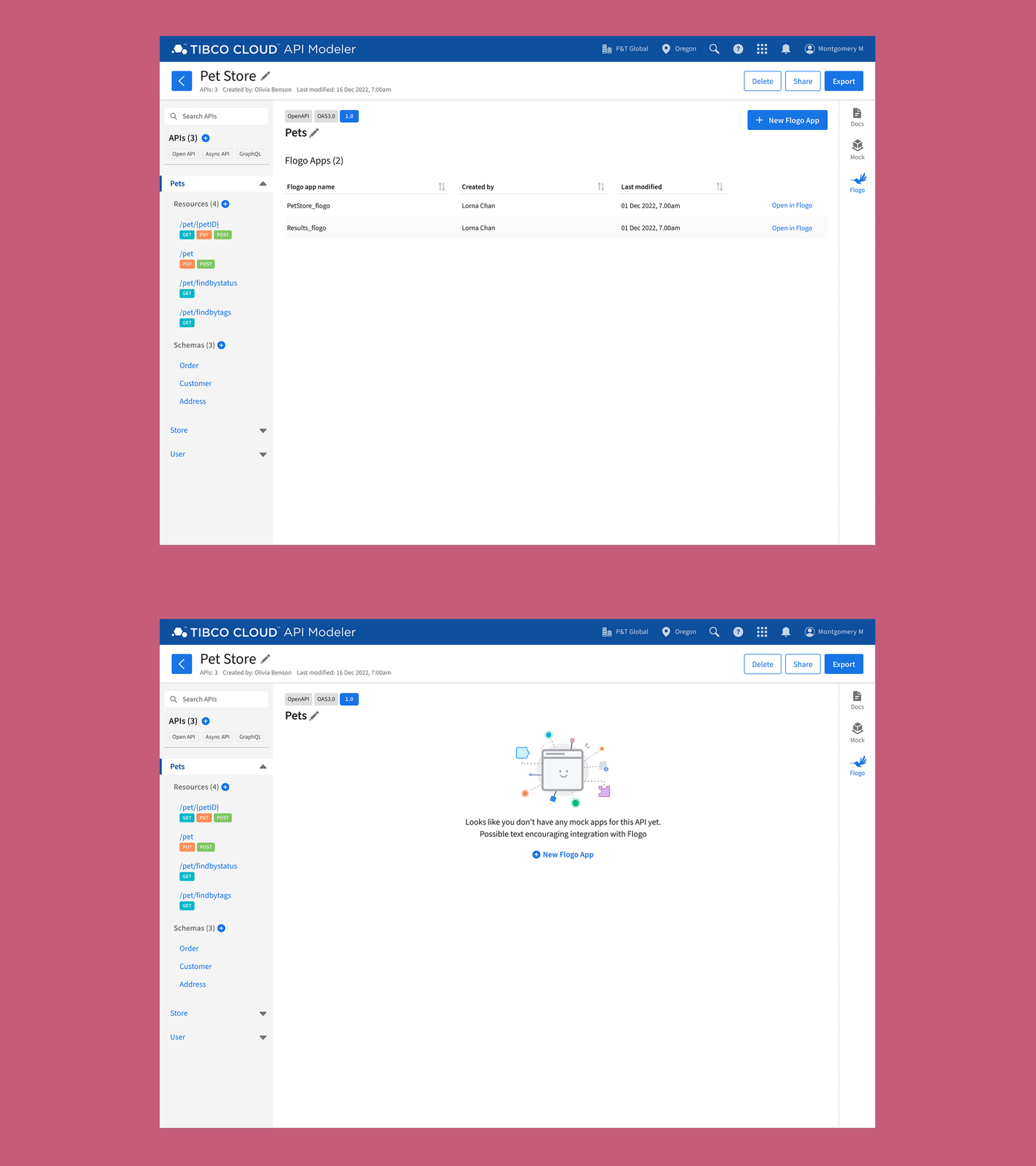
Documented integration use case showing the end-to-end journey from modelling an OpenAPI spec in TCAM through to deploying a Flogo application in TCI.
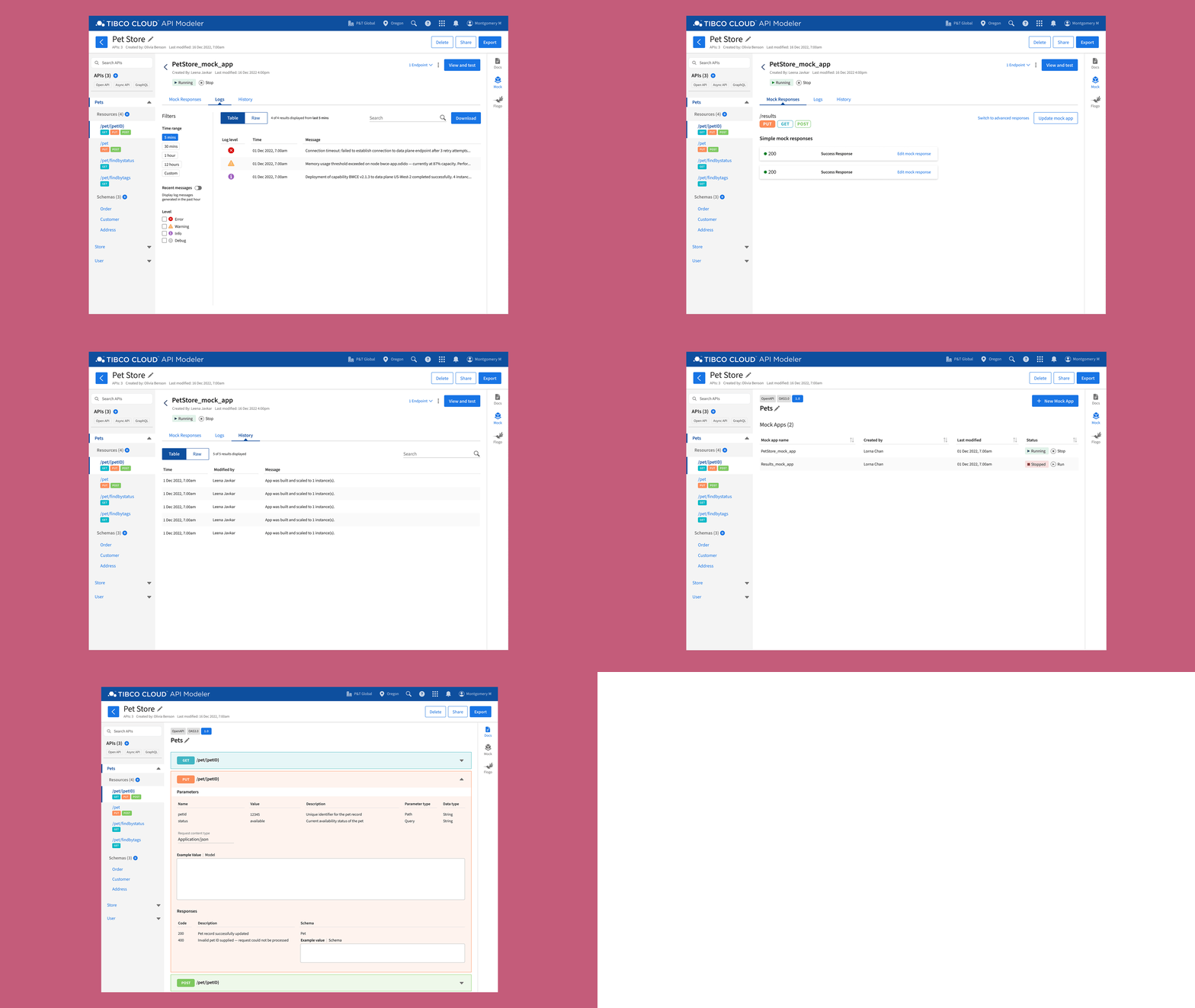
Mocking workflow built directly into the API Modeler, allowing users to preview, test, and publish mock apps without leaving their working context.
Final Design
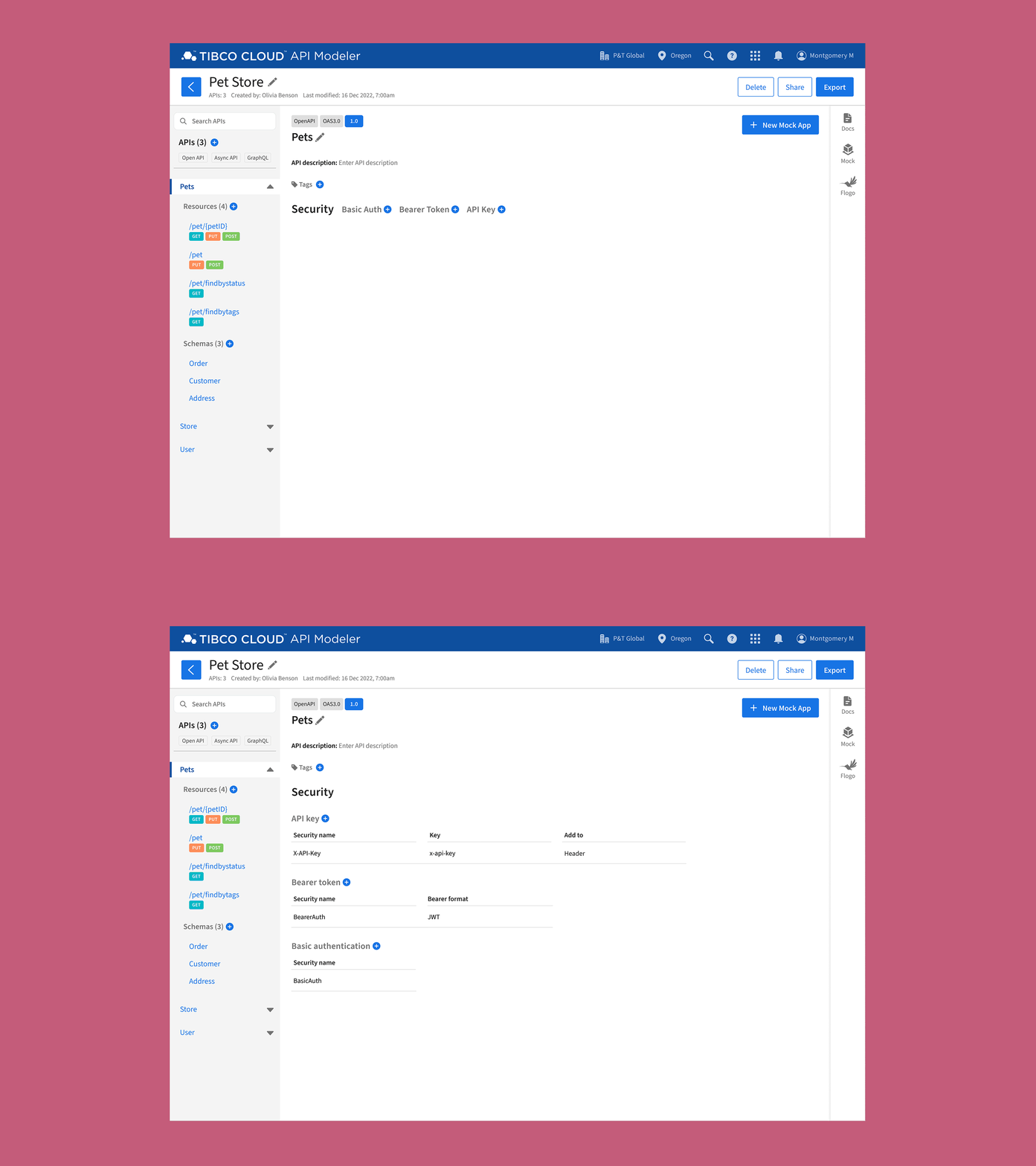
The redesigned product centred on a homepage giving users an overview of recent projects, API types, mock apps, and projects at a glance. From there, users could create an API, define resources, add method types and parameters, and build out schemas, all within a single, contextual view. Optional fields were progressively revealed via a "+" interaction to avoid overwhelming new users. A global schema option in the side nav allowed schemas to be created once and reused across multiple responses.
AsyncAPI followed the same design language and navigation patterns as OpenAPI, with a developer view available for both, allowing users to edit specs directly and surface errors inline. The right-hand panel provided consistent access to documentation, mock apps, and Flogo integration throughout, ensuring users could move between tasks without losing context.
Mocking was accessible directly from the right panel once an endpoint was created, allowing users to preview, test, and publish mock apps without leaving their working context. Mock responses, logs, and history were all accessible in one place, with a dedicated Mock tab in the side nav providing a full list of active mock apps and their statuses.
Pendo Analytics
To track product performance post-launch and move away from assumption-based decision making, I worked with the engineering team to integrate Pendo analytics directly into the API Modeler. This was a deliberate design initiative, giving the team real behavioural data to understand how customers were actually using the product once it was live.
Through Pendo I was able to track which features and CTAs customers were engaging with, monitor traffic patterns, map the user paths customers were taking through the product, and identify our most active accounts. This gave us a continuous feedback loop between real usage and design decisions, ensuring that post-launch improvements were grounded in evidence rather than internal assumptions.
The data gathered through Pendo directly informed prioritisation decisions for subsequent releases and provided the clearest measure of whether the redesign had achieved its goals.
Outcomes
The redesign transformed a product that had been functionally abandoned into one with a growing, engaged user base, backed by clear data at every stage.
-
From 2 to 47 consistent users, a 250% increase The most significant measure of success was user adoption. Before the redesign, the API Modeler had only two consistent users across the entire TIBCO customer base. Within the tracked post-launch period, that number grew to 47 consistent users, a 250% increase driven directly by a more intuitive, integrated, and capable product.
-
277 unique visitors in the first six months Traffic data from Pendo confirmed the redesign was reaching a significantly wider audience. In the first six months post-GA, the product recorded 277 unique visitors across 235 unique accounts, establishing a genuine user base where none had meaningfully existed before.
-
Sustained and accelerating engagement Usage didn't plateau after launch, it continued to grow. A notable traffic spike in March 2023 showed a +200% week-on-week increase, reaching 30 page views in a single week. This indicated that the product was gaining traction within the platform over time rather than experiencing a one-time bump at release.
-
Usability testing closed the loop The improvements informed by usability testing, clearer method deletion, updated right panel icons, and a revised editing view, directly contributed to the 5/5 task completion rates recorded in later test rounds. The product didn't just attract more users; it was measurably easier to use than what came before.
A product with 2 users and no meaningful engagement became one with 47 consistent users, 277 unique visitors, sustained week-on-week growth, and clear feature adoption data, all within the first year of launch. The combination of continuous usability testing and Pendo analytics meant every design decision was grounded in evidence, and the results reflected that.
Reflection
This project reinforced the value of grounding design decisions in real usability data rather than assumptions. The old modeler had been overlooked for years, not because the concept was flawed, but because the execution had fallen too far behind user expectations. Starting with a thorough audit of what wasn't working, and testing continuously throughout, gave us a solid foundation for every design decision we made. The structured usability testing programme was particularly valuable, the specific issues it surfaced, like the invisible delete icon and the ambiguous API count label, were the kinds of things that would never have been caught through internal review alone. The Pendo integration was equally important, moving from gut feel to behaviour data changed how the team talked about the product and made future prioritisation conversations much more grounded.